
What hairstyles are suitable for a beach wedding?
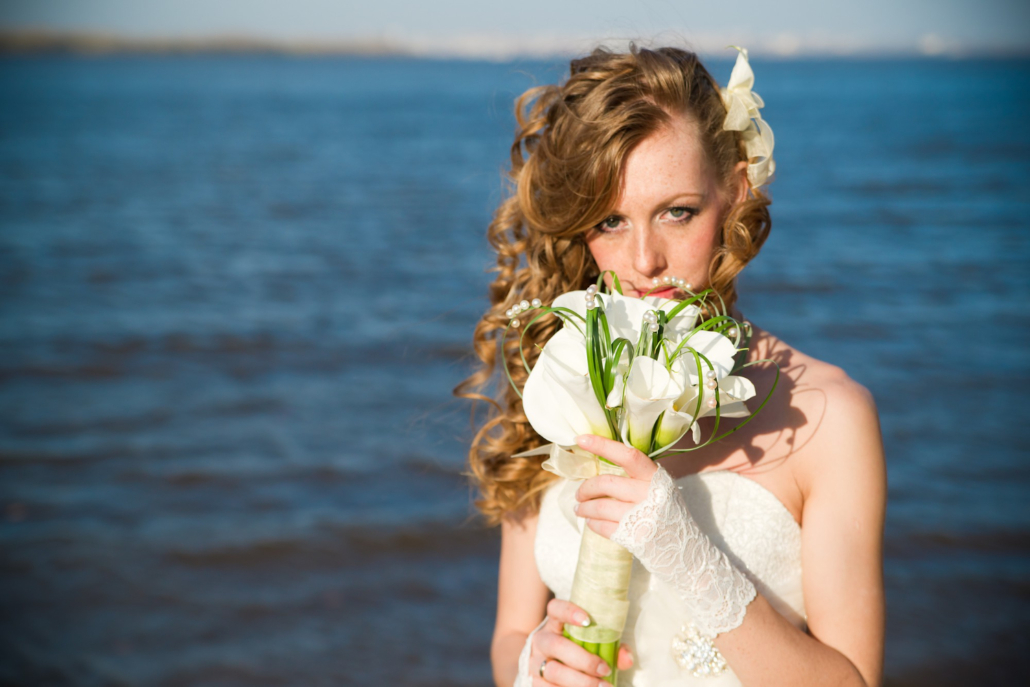
The ocean coast has its own rules. Even your very first walk by the water can ruin a hairstyle that took hours to create. Once the initial excitement subsides and the romantic proposal to get married gives way to preparations, creating the perfect look becomes the main task. However, studio shots have little in common with the actual microclimate of the coast.
The beach climate is a serious test for your hair. Without taking humidity, wind, and salty air into account, carefully styled curls will turn into chaotic strands in just half an hour, and a sleek style will start to frizz. To prevent this from happening, your choice of hairstyle should be based on an understanding of the weather and the right styling techniques.
Why a beach wedding requires a special approach to hair
The coast has specific natural conditions that directly alter the structure of your hair. The main factors affecting it are:
- Ocean wind. It’s rarely just a light breeze. Constant air currents tangle loose hair, blow strands into your face, and disrupt delicate styles.
- High humidity. Moisture in the air instantly breaks down the bonds within the hair shaft that maintain its artificial shape. Straight hair becomes frizzy when exposed to moisture, while curly hair curls uncontrollably.
- Heat and sun. High temperatures stimulate the activity of the scalp’s glands. Volume at the roots disappears in a matter of hours, and the hair looks heavy.
- Salty air. Salt settles on the strands, making them stiff and dull. The hair loses its natural movement and feels sticky to the touch.
Fine hair instantly loses volume when exposed to humidity and the sun. Thick and coarse hair becomes unmanageable due to salt; it’s difficult to secure with regular hairpins without first preparing the texture.
The Most Common Mistakes Brides Make When Choosing a Hairstyle
The desire to recreate a look from a picture without considering real-world conditions often leads to disappointment.
Completely loose hair
- Condition and risk: Loose strands quickly lose their shape and become tangled when exposed to humid wind.
- Consequence: In photos, the bride’s face is obscured by her hair, and the hairstyle itself looks unkempt right from the start of the ceremony.
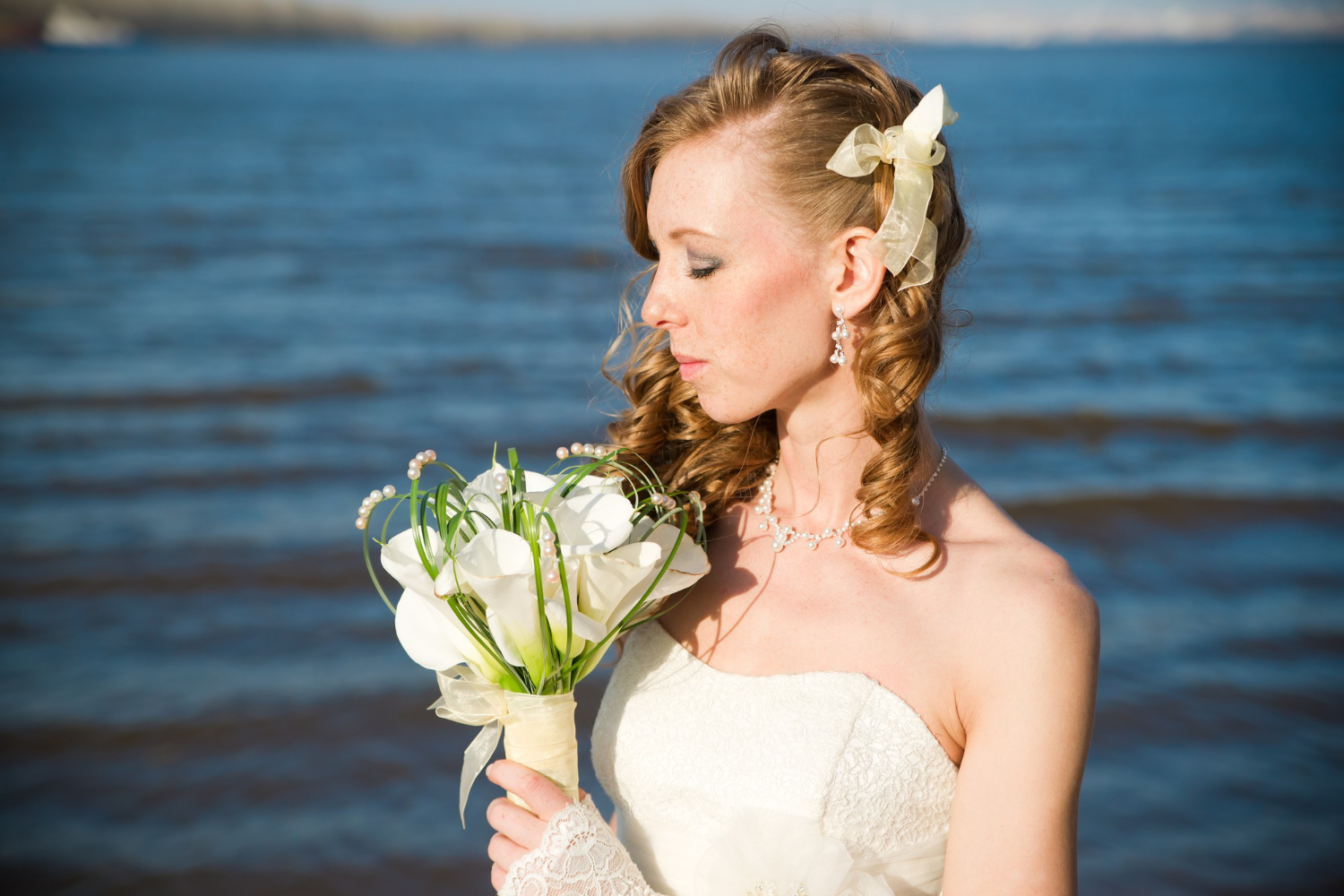
- Solution: If you want to leave your hair down, opt for half-up styles where the front strands are securely pinned at the nape of the neck.
Overly Complex Updos
- Condition and Risk: Classic updos with dozens of bobby pins are designed for indoor settings. On the beach, strong winds act as a constant force, destabilizing the structure.
- Consequence: The hairstyle loses its shape, hairpins fall out, and attempts to fix the situation make the hairstyle asymmetrical.
- Solution: Opt for low, flexible styles that move naturally and are easy to adjust.
Excessive Hairspray
- Situation and Risk: Attempting to set the hairstyle with a large amount of standard alcohol-based hairspray.
- Consequence: The hair sticks together into a rigid “helmet.” When the wind blows out a few strands, they look unnatural, like wire, and the entire hairstyle loses its natural look.
- Solution: Use dry hairsprays, texturizing powders, and sprays that keep the hair flexible while maintaining its underlying shape.
Heavy accessories and lack of a trial run
- Situation and risk: Bulky metal combs or crowns that are held in place only by their own weight, and skipping a trial run.
- Consequence: When you move or the wind blows, heavy accessories slide down, pulling strands of hair with them. Without a trial run, you’ll only discover on your wedding day that your hair doesn’t hold its shape in humid air.
- Solution: Lightweight hairpins, matte-finish bobby pins, and a mandatory trial run of the hairstyle a few weeks before the event.
Which hairstyles work best for a beach wedding
Professional wedding planning on the coast always involves working with stylists who recommend practical and long-lasting hairstyles.
Low Textured Bun
- Who it suits: Women with medium-length, medium-thickness hair; suits most face shapes.
- Style: Modern classic, minimalism, coastal luxury.
- Advantages: The most reliable choice for the beach. An open neck helps beat the heat. The breeze adds light, natural texture to the bun without disrupting the base.
- Limitations: Requires careful preparation of the roots to create volume.
Hollywood Wave Tucked to One Side
- Who it’s for: Long, thick hair.
- Style: soft glamour, an elegant evening look.
- Pros: Creates an elegant and cinematic look. Securing the strands to one side with a hairpin keeps hair out of your face in the wind.
- Limitations: Requires the use of heat-resistant silicone primers before using hot styling tools.
Low ponytail (smooth or textured)
- Who it suits: Women with long straight or wavy hair.
- Style: modern minimalism, “quiet luxury” (old money) aesthetic.
- Advantages: Looks stylish and dynamic; holds up all day. A sleek ponytail is completely unaffected by humidity, while a textured ponytail flows beautifully in the wind without tangling.
- Limitations: The sleek version requires a flawless scalp and well-defined facial features.
Romantic Braid
- Who it suits: Long, voluminous hair (hair extensions can be used).
- Style: boho, rustic, relaxed beach style.
- Advantages: The leader in staying power. Even if a few strands blow out in the wind, it will only emphasize the boho aesthetic. Doesn’t require constant touch-ups.
- Limitations: On fine hair, without using additional strands, the braid may look too simple.
Half-Up, Half-Down
- Who it suits: medium-length hair with soft, natural waves.
- Style: a romantic look, or if you’re planning a light romantic picnic by the ocean.
- Pros: a compromise between the femininity of loose hair and the practicality of an updo. The face is exposed, but the length remains visible.
- Limitations: Loose ends may lose their curl by the end of the evening when exposed to moisture.
How to Choose a Hairstyle Based on Your Wedding Dress
The harmony of the look depends on how the hairstyle complements the silhouette of the dress:
- Open back. If the dress has a deep back cutout, it’s best to pull your hair up or style it into a high ponytail so as not to cover the dress’s key feature.
- Long veil. A heavy veil requires a sturdy base a low, tight bun or a braided style where the veil can be securely fastened and won’t slip while walking on the sand.
- A minimalist-style slip dress. It pairs perfectly with a sleek, low ponytail or a simple bun without any extra details.
- A boho-style dress. This calls for a light, airy look: textured braids, loose buns, or soft beach waves are ideal.
The Impact of Florida and Miami’s Climate on Hairstyles
Miami and the Florida coast have a specific subtropical microclimate with humidity above 75%. Salt spray affects hair more aggressively than ordinary humid air.
Stylists’ hair preparation routine for these conditions:
- Deep cleansing. Before styling, hair is washed with a deep-cleansing shampoo to remove residue from hair care products and silicones that weigh down the hair.
- Moisture blockers. Application of anti-humectant sprays that create a thin protective layer around each strand, blocking moisture from the air.
- Water-free styling. Water-free styling products are used (dry texturizing sprays, volumizing powders).
- Heat-setting. Each curl is heated and allowed to cool while clamped this sets the hair’s internal shape memory.
Wedding Accessories for Beach Hairstyles
Beach accessories must be resistant to moisture and sun:
- Pearls and mother-of-pearl. The best choice for “coastal luxury.” They don’t lose their luster in the sun and look very natural against the backdrop of the water.
- Fresh flowers. Choose long-lasting varieties: orchids, gypsophila, succulents, and freesia. Traditional roses or peonies will wilt in the sun within two hours.
- Lightweight metal hairpins. They should have sturdy prongs. Avoid smooth plastic hairpins they simply slip out of damp hair.
Practical Tips for Brides
- Do a hair trial 3 – 4 weeks before the wedding. It’s best to spend a few hours outdoors with your hairstyle to see how your hair reacts to the actual humidity in your area.
- Wash your hair the night before, not on the morning of the wedding. Freshly washed hair is too loose and doesn’t hold its shape as well.
- Put together a bridal emergency kit: travel-size dry shampoo, a few hairpins that match your hair color, blotting papers, and a comb.
- Book a stylist to be on hand for a quick touch-up right before the ceremony begins.
Where to Save Money and Where Not to
- You can save money on expensive, heavy hair accessories. A beach-style look calls for simplicity. A few fresh flowers or minimalist pearl hairpins often look more striking than a tiara.
- Don’t skimp on: a professional stylist and a hair trial. A stylist who lacks experience working in the humid coastal climate will use standard products, and your hairstyle will fall apart before the ceremony even begins.
Professional Takeaway
A beach wedding is always a story of freedom, movement, and natural beauty. Trying to create a completely static hairstyle on a windy shore is doomed to fail. The best choice is a flexible style that harmonizes with the surrounding nature rather than fighting against it.
The Exclusive 4 You team will help you find the perfect balance between your preferences and the weather conditions. Contact us, and we’ll organize everything for you in the best possible way we’ll select professional stylists and ensure your look remains flawless throughout the entire celebration.
FAQ: Frequently Asked Questions and Answers
Is it okay to wear your hair down for a beach wedding?
This is a big risk due to the wind and humidity. If you’re dreaming of wearing your hair down, it’s better to choose a “half-up” style, where the top section of your hair and the strands near your face are securely pinned back.
What’s the most durable hairstyle for a beach wedding?
A low, textured or sleek bun. It fully exposes the neck (which helps beat the heat), is securely held in place with bobby pins, and is virtually unaffected by the wind.
Is a trial hairstyle really necessary?
Yes, it’s a must. During the trial run, the stylist determines how your hair reacts to styling, how long the volume lasts, and selects the best water-repellent products.
How does hair behave in high humidity?
It tries to return to its natural state: it frizzes, loses volume, or curls uncontrollably. To combat this, stylists use alcohol-free texturizers and moisture-repellent primers.
Should you decorate your hairstyle with fresh flowers on the beach?
Yes, but only with long-lasting varieties (orchids, succulents, freesias, gypsophila) that hold their shape without water under the hot sun.
What hairstyles are currently trending for beach weddings?
Natural looks: the “old money” style with sleek textures, effortless elegance, low ponytails, and highlighting the natural texture of curls.
Is it necessary to have a stylist on hand throughout the wedding day?
If you’re planning an extended photo session on the beach before the ceremony, having a stylist on hand is highly recommended for quick touch-ups right before you step out to greet your guests.

